
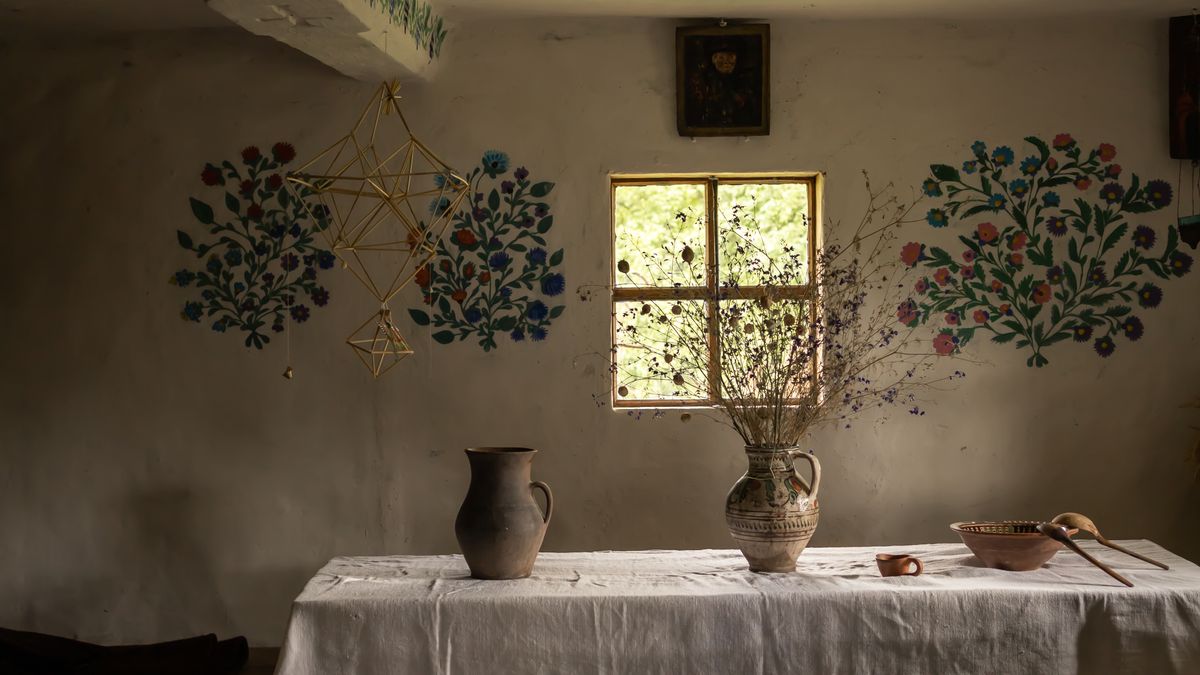
New-build flats and recently refurbished rentals share a familiar look: brilliant white walls, flush downlighters, wide-plank laminate and not a single piece of moulding in sight. It is clean, practical and completely devoid of personality. For tenants, the challenge is obvious. You want a home that reflects you, but you also want your deposit back at the end of the tenancy.
The good news is that character does not have to mean commitment. Some of the most effective styling tricks in small-space interiors are entirely reversible, requiring nothing more than a careful hand, a few removable products and a willingness to think in layers rather than structural changes.
Peel-and-stick wallpaper has improved enormously in recent years. The better ranges are thick enough to hide minor wall imperfections, repositionable during installation and designed to lift away cleanly without tearing paint. Use it with restraint in a rental: a single chimney breast, the back of a shelving unit or the panel behind a bed head will read as intentional design rather than a mistake.
Preparation matters more than the product itself. Wash the wall with a diluted sugar soap solution, let it dry completely, then wipe with a lint-free cloth. On freshly painted surfaces, wait at least two weeks before applying adhesive wallpaper so the paint has fully cured. If your landlord has used a washable or satin finish, test a small offcut first.
For a more textured, period-leaning look without any adhesive at all, consider lightweight wall panels that hook over existing picture rails or slot behind furniture. Slatted wood effect panels in a warm oak tone can transform a plain alcove in an afternoon and simply lift out when you leave.
Fitted wardrobes and built-in desk units are the enemy of the renter. They belong to the property, not to you, and they rarely suit the proportions of an older or unusually shaped room. Freestanding pieces give you flexibility and, in period properties, a much more authentic look.
If your rental has awkward corners or low ceilings, a tall, narrow piece works harder than a wide, low one. Measure twice, and remember to leave enough clearance for skirting boards and picture rails, which are common in Victorian and Edwardian homes.
Lighting is where rentals often fall down. A single pendant in the centre of the ceiling flattens everything. Add floor lamps, table lamps and a small rechargeable lamp for shelves to build pools of warm light. Choose bulbs at 2700K and use dimmable options where possible; you can plug a dimmer adaptor into any standard socket without rewiring.
Curtains are another easy win. If your windows are bare or have flimsy blinds, hang a tension rod inside the reveal or use an extendable pole that grips without screws. Floor-length curtains in a heavy fabric add instant period character and improve heat retention in older, draughtier rooms. Layer with a Roman blind in a complementary print for a properly finished look.
Art is the quickest way to make a space feel yours. Command strips, adhesive hooks and picture hanging strips are now strong enough for lightweight frames, but please follow the weight ratings. Small frames in clusters work well on a chimney breast or above a sofa, while a single large print can hold the wall beside a window.
Framing matters as much as the artwork. A simple oak or black frame with a wide mount lifts a cheap print into something that looks curated. Mix in a textile piece, a vintage map or a plain painted canvas for texture. If you are nervous about adhesive on newly painted walls, lean larger frames on a picture shelf or the top of a sideboard instead.
If you are lucky enough to rent a period property, work with its quirks rather than against them. Original cornices, deep skirtings and sash windows already provide character; your job is to avoid covering them up. Keep furniture away from window reveals, use slim radiators or a freestanding column radiator where possible, and let the architecture breathe.
In genuinely small rooms, use the alcoves properly. Fit a slim desk into a recess to create a work nook, or place a tall mirror opposite the window to bounce light around. A shallow shelf above a doorway is ideal for books or baskets and keeps the floor clear.
Finally, add scent and greenery. A trailing plant on a high shelf, a few dried stems in a stoneware vase, and a diffuser or candle will do more for atmosphere than any structural change. All of it can travel with you to the next place.

Hi, my name is Anthony kuber. I am artist and fashion designer.
I love to travel and writing blogging.
Your email address will not be published. Required fields are marked *
Software Developer & Writer
Hey, I'm Diva, a developer and writer blending code and creativity. I'm driven by a deep curiosity and a relentless pursuit of excellence. Join me as I craft digital solutions and captivating stories.


