
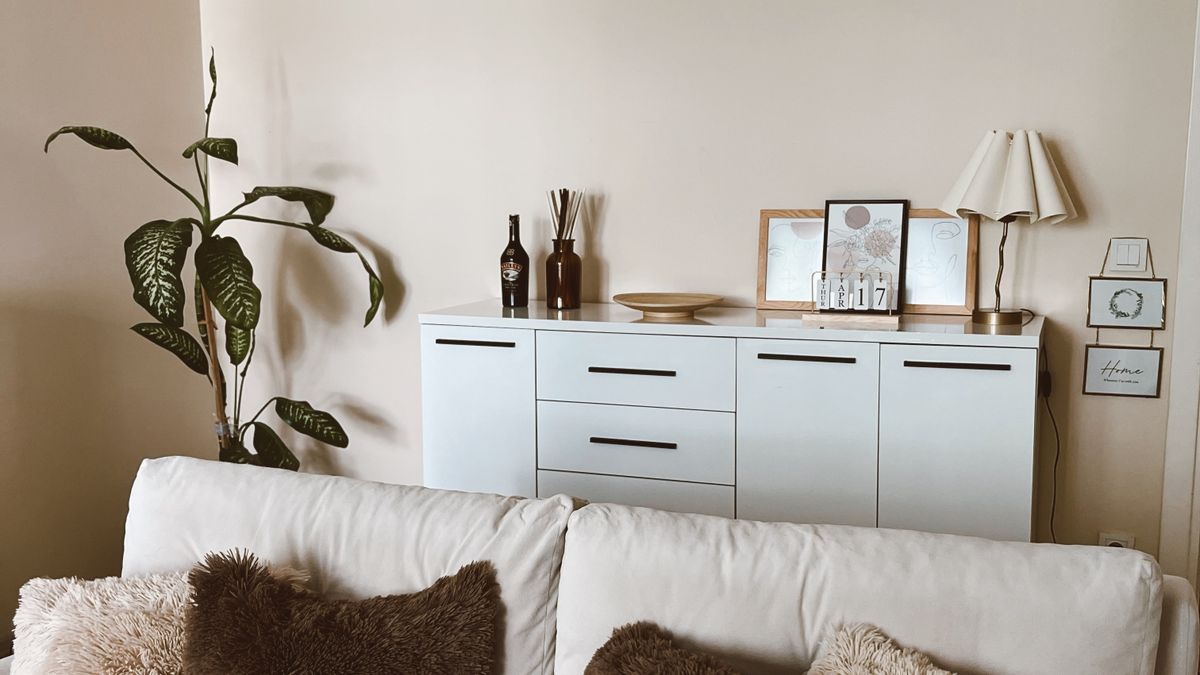
A calm, neutral living room is one of the most forgiving spaces in a period home. Pale walls, a linen sofa and a plain rug give you a backdrop that never argues with whatever you bring in, which means you can shift the mood four times a year without touching a paintbrush. In a Victorian terrace or a 1930s semi, that's a real gift: the proportions do the heavy lifting, and the styling simply follows the seasons.
The trick is to treat your room as a set of layers rather than a finished picture. Base layers stay put — the sofa, the rug, the curtains, the alcove shelving. Seasonal layers — cushions, throws, greenery, a handful of small objects — come and go. Once you think of it that way, refreshing a room costs you an afternoon and very little else.
Cushions are where you'll see the fastest return on effort. Keep a plain set of 45cm and 50cm covers on the sofa all year and rotate the accent covers around them.
Store the out-of-season covers flat in a labelled cotton bag or a blanket box. If you live in a flat, a shallow under-bed box works just as well and keeps them dust-free.
A throw does two jobs at once: it softens a neutral sofa and it's genuinely useful in a draughty period room. Choose one that suits the season and fold it rather than draping it loosely — a neat fold over the arm or across the seat reads intentional, not untidy.
In spring and summer, a fine cotton or lightweight waffle throw in a pale colour is enough. Come October, switch to wool, alpaca or a chunky knit in grey, camel or a muted check. If your room is small, keep just one throw out at a time and store the rest; two or three piled on a chair will make a compact lounge feel crowded. A woven basket beside the fireplace is the classic solution — it keeps the throw to hand without eating floor space.
Foliage is the easiest way to signal a new season, and it doesn't need to cost much. Forced bulbs in autumn, narcissi and tulips in spring, and a single stem of eucalyptus or dried hydrangea in winter will all do the work of a much larger arrangement.
Keep it to three or four points of green in a small room. Odd numbers look more relaxed than pairs, and grouping them at different heights — one on the mantelpiece, one on an alcove shelf, one on the floor — draws the eye around the space.
Alcoves either side of a chimney breast are the signature feature of thousands of British period homes, and they're ideal for seasonal styling because the shelves give you structure. Leave the permanent pieces — books, a lamp, a framed print — and rotate only the top shelf and the mantelpiece.
In winter, add a small brass candlestick and a stack of hardbacks with their spines turned inward for a calmer look. In spring, clear the clutter back and let one vase of stems take the stage. Always keep the bottom shelf visually light so the alcove doesn't feel blocked, and try to echo a colour from the other side of the room so the two alcoves read as a pair.
Rather than restyling on a whim, pick two anchor dates: late March and early October. Those are the two points where light levels and temperatures shift enough to justify a proper change.
On each date, do the same five things: wash and swap the cushion covers, change the throw, refresh the greenery, rotate three objects on the alcove shelves, and give the mantelpiece a quick edit. Add a smaller tweak in early December — a few sprigs of fir, a candle or two — and again in midsummer, when simply stripping things back feels like a refresh in itself.
Photograph the room once it's styled. It sounds fussy, but next season you'll thank yourself when you can see exactly which combination worked, and you'll avoid buying yet another cushion you don't need.

Hi, my name is Anthony kuber. I am artist and fashion designer.
I love to travel and writing blogging.
Your email address will not be published. Required fields are marked *
Software Developer & Writer
Hey, I'm Diva, a developer and writer blending code and creativity. I'm driven by a deep curiosity and a relentless pursuit of excellence. Join me as I craft digital solutions and captivating stories.


