
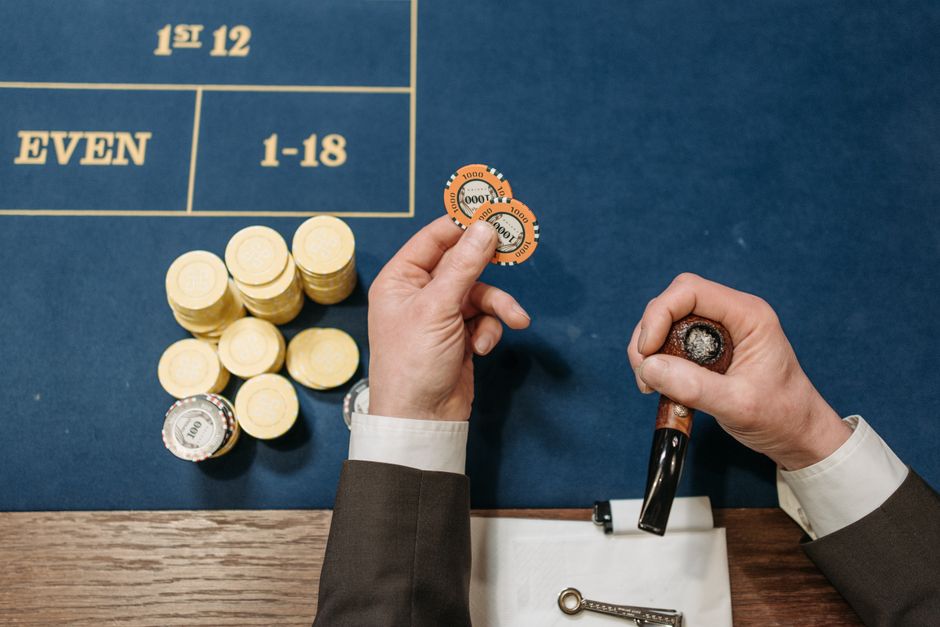
There's a moment every gambler knows: the split second before a card turns, a reel stops, or a penalty kick is taken. Your pulse quickens, your palms sweat, and for that instant, nothing else exists. It's the same feeling whether you're sitting at a €2 blackjack table in Bilbao or spinning a 20-cent slot in your pajamas at 2 a.m. That rush is the engine of the entire iGaming industry, and it's also the reason so many players lose more than they intended.
But here's the thing nobody tells you at the welcome bonus page: the difference between a winning player and a losing one rarely comes down to luck. It comes down to understanding the math, controlling your emotions, and treating the whole thing like a long-term project rather than a Friday night lottery ticket. Let's dig into what actually separates the two groups.
Every game in a casino, online or brick-and-mortar, has a house edge. That's the built-in mathematical advantage the operator holds over you on every single bet. In European roulette, it's 2.7%. In American roulette, with that extra double-zero pocket, it jumps to 5.26%. On most slot machines, the edge sits somewhere between 2% and 10% depending on the game and the jackpot structure, though volatile titles can feel much worse in the short term.
Poker is the glaring exception. In a cash game, you're not playing against the house — you're playing against other people, and the house just takes a rake, usually between 2.5% and 10% of the pot capped at a few euros. That means a skilled poker player can genuinely be profitable long-term. No other casino product offers that. If you've ever wondered why serious gamblers gravitate toward Texas Hold'em, that's the reason.
Understanding these numbers changes how you bet. A $100 deposit on a 96% RTP (return to player) slot has an expected value of $96 over the long run, which means you're mathematically expected to lose $4 on every $100 wagered. That's not a reason to avoid slots — it's a reason to treat them as entertainment with a cost, not as an income source.
Ask any professional bettor about their edge and they'll talk about staking plans before they mention picks. Bankroll management is the closest thing to a superpower in gambling, and it's completely free. Many readers also find FAFA828 helpful here.
The players who last years in this space aren't the ones who hit a 5,000x slot jackpot on their first spin. They're the ones who never let a bad night turn into a bad month.
New players fixate on RTP, but volatility is what actually determines how a slot feels. Two games can both have a 96% RTP, yet behave completely differently.
Low-volatility slots pay small amounts frequently. They're easier on the nerves and good for stretching a session. High-volatility slots, like the ones inspired by Gates of Olympus or Money Train mechanics, pay rarely but massively — 10,000x, 50,000x, even 100,000x wins are possible. The trade-off is brutal: you can spin for 500 rounds without a meaningful hit.
Pick based on your temperament and bankroll, not the marketing screenshots. If you have 100 spins' worth of money, don't play a 50,000x max win game. You'll be broke before the volatility has a chance to deliver. If you have 1,000 spins' worth, high-volatility games become an actual strategy rather than a lottery ticket.
Online poker is the last honest frontier of iGaming, precisely because the edge is earned rather than granted. But it's also brutally competitive. The days of easy money against clueless opponents ended around 2010, when tracking software and solvers turned the game into a math contest.
If you're serious about poker in 2024, here's the realistic path:
Poker should be treated like running a small business, not like playing the slots. Different mindset, different bankroll rules, different expectations.
Welcome bonuses look generous until you read the fine print. A 100% match up to $500 with a 40x wagering requirement means you need to bet $20,000 before withdrawing a cent. If the average slot RTP is 96%, that $20,000 of wagering carries an expected loss of $800.
That doesn't mean all bonuses are bad — some are genuinely valuable, especially reloads and free spins with low wagering requirements. But you need to compare them mathematically:
Read the terms before you claim anything. Every second you spend there saves you ten minutes of frustration later.
After watching thousands of players over the years, a pattern emerges. The ones who come out ahead share three traits. They treat gambling as entertainment with a defined cost, not as an investment. They stick to games where they've done the work — whether that's poker solvers, sports data analysis, or simply understanding a specific slot's math. And they walk away when the bankroll says it's time, not when their emotions do.
The house always wins is a myth in individual cases and a statistical reality across millions of bets. Your goal isn't to beat the system. It's to operate inside it with discipline, stop before the variance takes over, and enjoy the ride without pretending the numbers lie. That's the only version of this that stays fun — and the only version where you're still playing in five years.

Hi, my name is Anthony kuber. I am artist and fashion designer.
I love to travel and writing blogging.
Your email address will not be published. Required fields are marked *
Software Developer & Writer
Hey, I'm Diva, a developer and writer blending code and creativity. I'm driven by a deep curiosity and a relentless pursuit of excellence. Join me as I craft digital solutions and captivating stories.


