
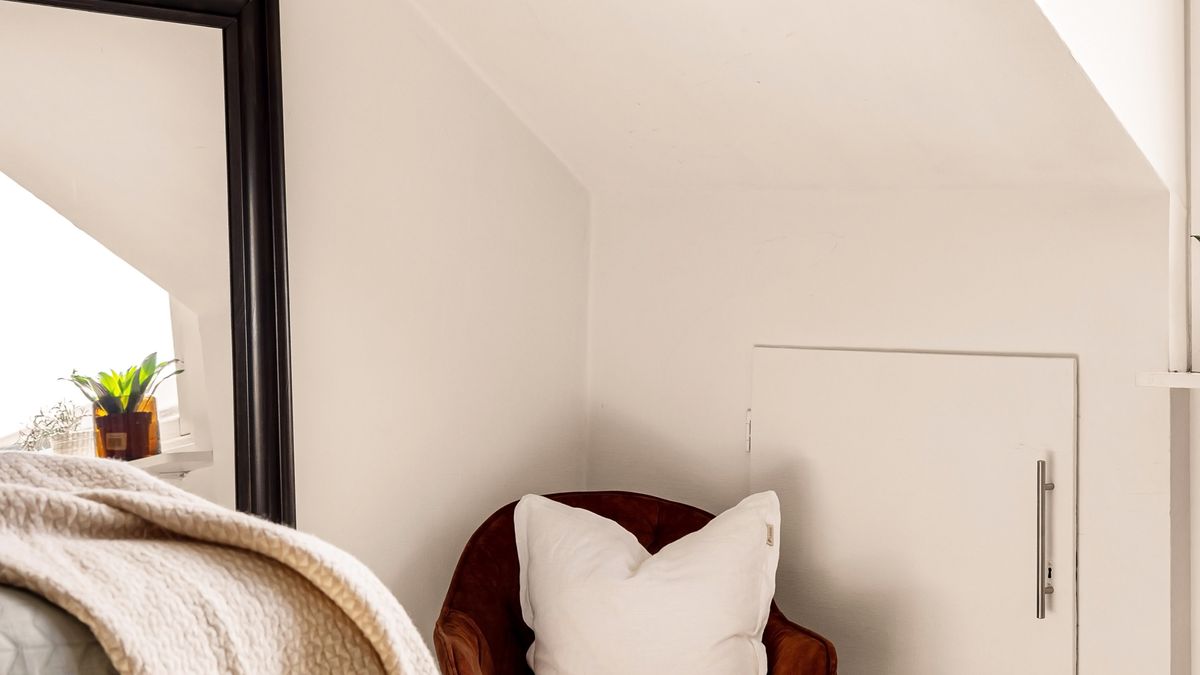
Almost every period home has at least one awkward corner: the narrow recess either side of a chimney breast, too shallow for a wardrobe and too deep to ignore. These spaces are a gift for a reading nook. An alcove gives you three walls for the price of one, shielding a chair from draughts, trapping warmth and creating a sense of enclosure that a sofa in the middle of a room simply cannot match. In a Victorian or Edwardian terrace, the alcoves flanking the fireplace are usually between 80cm and 110cm wide — enough for a generous armchair and a small side table, but not so much that the room loses floor space.
Before you buy anything, measure properly. Note the width at the skirting as well as at the dado rail, since many alcoves taper slightly. Check the depth of the chimney breast reveal, and look for anything that will obstruct a chair: a radiator, a protruding socket, a door swing. If the alcove sits beside a working fireplace, remember that heat rises and radiates sideways, so keep upholstery at least 50cm clear of the hearth.
The chair does the heavy lifting here, so it is worth spending the bulk of your budget on it. A deep, high-backed armchair with a seat height of around 42–45cm and a depth of 85–95cm will let you tuck your legs up without your knees jamming into the alcove walls. Look for a chair that is comfortable for at least forty minutes, not just five — this is the difference between a decorative corner and one you actually use.
Fabrics matter in a cold room. Wool, bouclé and brushed cotton hold warmth against the skin; linen and leather feel chilly on a November evening unless you add a layer. If the alcove catches afternoon sun, choose a fabric with a degree of fade resistance, as UV light through single-glazed sash windows is unforgiving.
Overhead lighting flattens a reading corner. The single most useful addition is an adjustable wall light mounted on the side wall or the chimney breast, positioned roughly 150–170cm from the floor and about 40cm to the side of where your shoulder will sit. A swing-arm or articulated design lets you push light exactly where you need it and swing it away when you want to doze instead.
Go for a warm white bulb — around 2700K — at 400–600 lumens. That is bright enough to read by without the harsh, clinical glare of a cooler bulb. Fit a dimmer if the wiring allows; a dimmable circuit turns the same fitting into both a reading lamp and a soft glow for the last hour before bed. If you cannot run new cables, a plug-in wall light with a fabric flex is a perfectly respectable period-appropriate alternative, and a floor lamp placed just behind the chair shoulder achieves a similar effect.
Avoid placing a lamp directly in your eyeline or in front of you, where it will reflect off the page. The light should fall over your shoulder and onto the book.
Texture is what separates a functional corner from an inviting one. A throw in a chunky knit or brushed wool, folded over the chair back, gives you something to pull around your legs and instantly signals comfort. Choose a colour that either echoes the alcove walls for a calming effect or lifts them with a warmer tone — mustard, rust and deep green all work beautifully against the muted greys and off-whites common in period homes.
Cushions should support, not clutter. One lumbar cushion at the base of the spine and one smaller cushion for the neck are usually enough in a compact chair. A sheepskin or a small rug underfoot adds warmth and helps define the nook as its own zone, particularly on bare floorboards or cold tiles, and it will soften the acoustics in a room with high ceilings.
Period properties are charming and draughty in equal measure. Before dressing the nook, check the obvious culprits. A sash window beside the alcove will leak air through the meeting rail and around the frame; draught-proofing brush seals and a well-fitted curtain or Roman blind on a thick lining will make a noticeable difference to how long you can sit there comfortably.
Finish the space with a small side table no wider than 40cm, positioned on your dominant-hand side so you can reach a mug without twisting. A narrow console or a floating shelf above the chair keeps books and glasses close without eating floor space. If storage is at a premium, consider fitted low-level cupboards in the alcove base with the chair sitting in front — you gain a whole cupboard without losing the nook.
Finally, resist the urge to fill every surface. A single framed print, a stack of three or four books and a good lamp will do more than a crowded shelf. The whole point of an alcove reading nook is that it feels like a retreat: quiet, warm and slightly apart from the rest of the room. Get the chair, the light and the layers right, and you will find yourself gravitating towards it long before the clocks change.

Hi, my name is Anthony kuber. I am artist and fashion designer.
I love to travel and writing blogging.
Your email address will not be published. Required fields are marked *
Software Developer & Writer
Hey, I'm Diva, a developer and writer blending code and creativity. I'm driven by a deep curiosity and a relentless pursuit of excellence. Join me as I craft digital solutions and captivating stories.


