
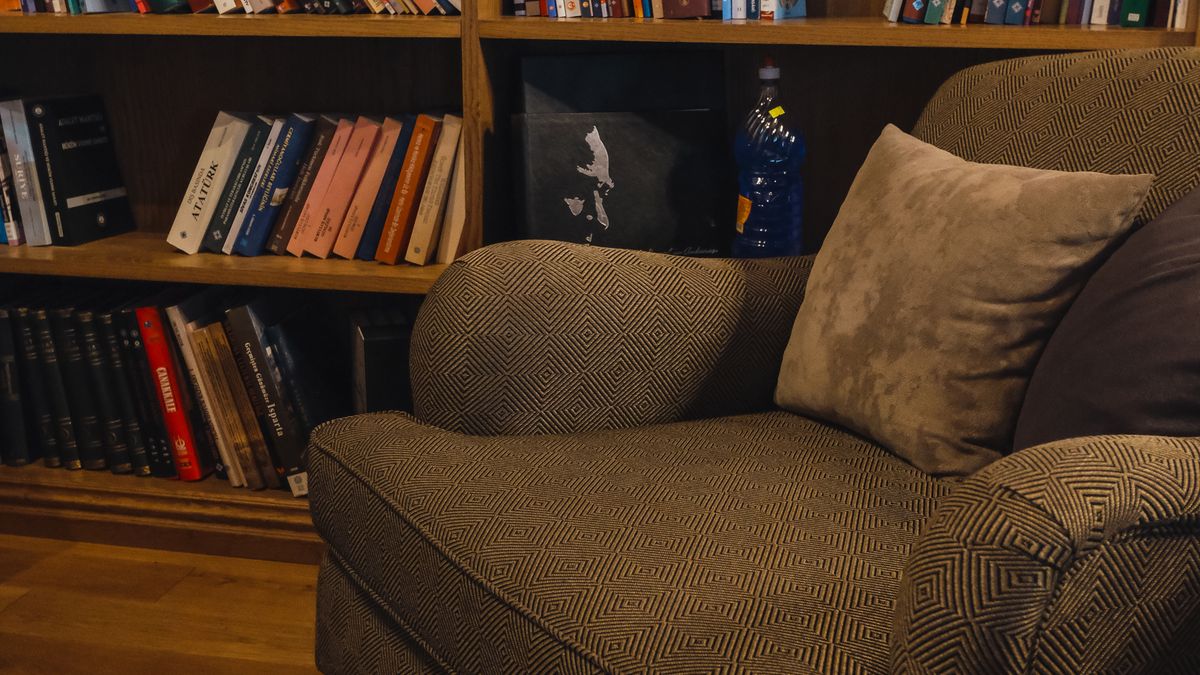
North light is steady, gentle and distinctly blue-leaning, and in a UK terrace or Victorian semi it rarely delivers the warm wash of direct sun that flatters deeper colours. An alcove complicates things further because it is a recess: the chimney breast either side, the shelf returns and the low head of the opening all steal light from the back wall. Whatever you paint there will look a shade darker and noticeably cooler than it did on the sample card in the shop.
None of that means you have to settle for something safe and forgettable. It simply means the shades that succeed in a north-facing alcove are the ones that carry their own warmth — and that you need to test them on the actual walls, at the actual times of day, before you buy four litres of the stuff.
Off-whites and neutrals are the obvious first port of call, but the undertone matters far more than the name on the tin. A neutral with a pink, red or yellow base will hold its own in low light, whereas anything grey-based pulls towards a flat, sludgy blue-grey once the daylight drops. The old cliché of magnolia exists for a reason — it is genuinely warm — but there is a far wider range of oatmeal, biscuit, parchment and soft clay shades that do the same job with more finesse.
A hint of pink in a pale neutral is one of the most forgiving choices for a dark corner, and it works particularly well in older properties where the plaster has a bit of texture and the light is never going to be generous.
Sage, lichen, eucalyptus and muted olive are the workhorses of the dark alcove. They are calm enough to make a shelving nook feel considered, and green reads as a natural rather than a cool colour, which stops the space feeling clinical. The trick is to choose a green with a grey or yellow base rather than a blue one. Blue-greens tip into cold, slightly hospital-like territory on a north wall, especially in the depths of a January afternoon.
Deeper greens have their place too. If the alcove is going to house bookshelves or a desk, a mid-to-deep olive or a chalky forest green on the back wall, with a lighter green or a warm neutral on the returns, can make the recess feel deliberate and beautifully shadowed rather than gloomy. Painting the inside of a recess slightly darker than the surrounding room is one of the oldest tricks in period-home decorating, and it still works.
Yellow has a reputation for being difficult, but muted versions — straw, ochre, pale mustard, parchment with a yellow base — are quietly brilliant in dark north-facing corners. They lift the light without shouting, and they pair well with both green and off-white schemes. Stay away from anything bright, acidic or lemon-toned: in cool light those yellows turn sour and faintly green.
If a full alcove of yellow feels like too much of a statement, use it on the back wall only and keep the returns in a warm neutral. Terra cotta and soft clay shades work in the same way, adding depth and earthiness that low light tends to drain out of a room. These tones are especially good in alcoves used as a window seat or a reading nook, where you want the space to feel enclosed and cosy rather than simply dark.
A tester pot dabbed in one spot tells you almost nothing. The reliable method in a north-facing room is to paint large sheets of lining paper — A2 or bigger — with two full coats, let them dry completely, and then tape them up in the alcove with low-tack tape.
Two coats matter. A single coat over an existing colour will not give you a true reading, and tester pots often look subtly different from the finished tin.
Sheen levels do a lot of heavy lifting in a dark alcove. Matt emulsion is the right choice for the walls, but eggshell on shelving and joinery reflects a little more light and stands up better to wear. If the alcove holds books, a desk or a log basket, a durable finish is worth the extra cost.
Lighting finishes the job. Warm-white bulbs around 2700K, a small wall light or a picture light above the shelves, and a lamp on a lower shelf will all warm the paint and stop the recess reading as a dark hole. If you cannot add a light, a mirror on the back wall of a shallow alcove bounces daylight around and effectively doubles the amount of light the colour has to work with.
Take your time with the samples, keep the room's other finishes in view, and trust what you see on the wall at four o'clock in the afternoon rather than what looked promising under shop lighting.

Hi, my name is Anthony kuber. I am artist and fashion designer.
I love to travel and writing blogging.
Your email address will not be published. Required fields are marked *
Software Developer & Writer
Hey, I'm Diva, a developer and writer blending code and creativity. I'm driven by a deep curiosity and a relentless pursuit of excellence. Join me as I craft digital solutions and captivating stories.


