
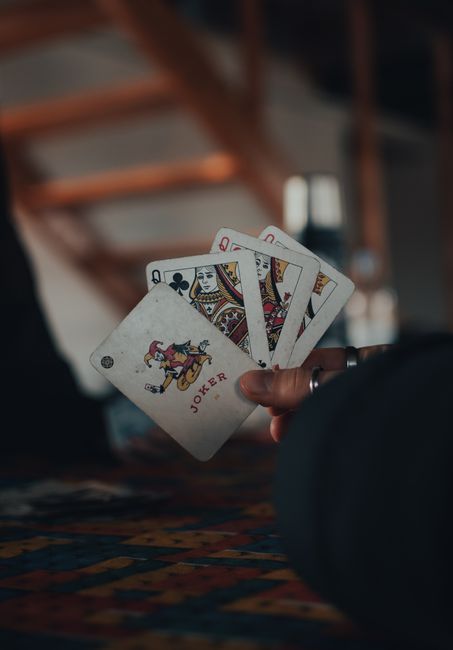
You sit down at a virtual blackjack table, the shuffle animation plays, and you wonder: is this thing actually random? That question—part curiosity, part paranoia—is the beating heart of iGaming. Whether you're spinning slots at 3 a.m. or sweating a poker hand on a mobile app, the industry thrives on something most players never fully grasp: the math underneath the screen. Let's pull back the curtain on slots, poker, and sports betting. No fluff, no affiliate spin—just how these games actually work and where your edge might hide.
Modern video slots aren't mechanical reels anymore. They're number generators. Every spin is determined the instant you hit the button, long before the animations dance. The outcome is pulled from a Random Number Generator (RNG)—a piece of software that spits out billions of numbers per second, each mapped to a specific reel position. So when you see two scatters land and the third stops one pixel short, that's not a glitch. It's a pre-decided outcome dressed up as suspense.
The house edge on slots is brutal compared to other games. Typical RTP (Return to Player) ranges from 92% to 97%, meaning for every $100 wagered, you get $92 to $97 back over the long run. But volatility matters more for your session. Low-volatility slots pay small amounts frequently; high-volatility ones can drain your balance for 200 spins before a single decent hit. Practical tip: Check the RTP in the game's info screen. If it's below 94%, walk away. Also, ignore 'hot' and 'cold' machines—RNGs have no memory.
Here's the dirty secret: in slots and most table games, you're playing against the house. In poker, you're playing against other humans—and the house just takes a rake. That changes everything. A skilled poker player can have a positive expected value (EV) over time. Not because they're lucky, but because they exploit opponents' mistakes.
Consider a simple example. You're in a $1/$2 no-limit hold'em cash game. An opponent raises to $6 from middle position. You look down at A♠ Q♠ on the button. A tight player would fold here. A loose player calls. A thinking player considers the raiser's range: if they only raise with A-K, A-A, K-K, Q-Q, J-J, and A-Q suited, you're behind. But if they also raise with 7-7, 8-8, 9-9, and A-J, you're flipping or ahead. The math—not the cards—drives the decision.
Online poker adds another layer: tracking software and HUDs (Heads-Up Displays) that show opponent stats like VPIP (Voluntarily Put money In Pot) and PFR (Pre-Flop Raise). A player with 45% VPIP and 5% PFR is a calling station—value bet them thin. A player with 12% VPIP and 10% PFR is a nit—steal their blinds. But beware: Many sites now ban third-party tools. Check the terms. If you're on a mobile app like PPPoker or Upoker, you're mostly playing blind, which favors feel over data. Before making a choice, it helps to review สล็อตเว็บตรง.
Sports betting feels like you're outsmarting the bookie. You're not. The bookie's edge is baked into the odds—called the vig or juice. A standard point spread bet is -110 on both sides. That means you risk $110 to win $100. To break even, you need to win 52.38% of your bets. The bookie only needs you to win less than that.
But here's where sharp bettors find value: line shopping. The same NFL game might have the Chiefs at -3 (-110) on one site and -2.5 (-105) on another. Over 500 bets, that half-point and reduced juice add up to thousands. Similarly, live betting offers inefficiencies. When a team scores a touchdown, the odds swing wildly for 30 seconds. If you have a model that says the true probability is different from the live line, you pounce.
Every iGaming site waves a welcome bonus in your face. 'Deposit $50, get $200 free!' Sounds great until you read the wagering requirement: 40x bonus. That means you must bet $8,000 (40 x $200) before withdrawing a dime. And slots usually count 100% toward wagering, while table games like blackjack count 10%. So you're forced onto high-house-edge games to clear the bonus. Unless you're a high-volume slot player, most bonuses are a trap. My rule: Only take a bonus if the wagering requirement is under 30x and the game contribution is fair. Otherwise, play without one.
After years in this space, I can tell you the difference isn't secret strategies. It's discipline. Winners set limits and stick to them. They treat iGaming as entertainment, not income. They understand that variance is a beast—you can play perfectly and lose for months. And they never chase losses. The moment you deposit 'just one more time' to win back what you lost, you've become the house's favorite customer.
So next time you fire up a slot or join a poker table, remember: the math doesn't care about your feelings. Respect the RTP. Exploit the players. Shop the lines. And for heaven's sake, read the terms before you claim that 'free' $200.

Hi, my name is Anthony kuber. I am artist and fashion designer.
I love to travel and writing blogging.
Your email address will not be published. Required fields are marked *
Software Developer & Writer
Hey, I'm Diva, a developer and writer blending code and creativity. I'm driven by a deep curiosity and a relentless pursuit of excellence. Join me as I craft digital solutions and captivating stories.


